


In the next decade, augmented reality glasses are expected to become as popular and useful as smartphones. These AR glasses/headsets, which allow users to see and interact with virtual content in the real world, have the potential to revolutionize communication and access to information.
This article explores the potential impact of augmented reality glasses and headsets on various industries, considering how they could become the dominant form of personal computing.
The entry of augmented reality glasses and headsets into the mass market
Augmented reality headsets and glasses are becoming mainstream technology for consumers, and many companies are launching their devices. These headsets and glasses allow users to see and interact with digital content in their immediate environment, providing an unprecedented level of immersion.
AR glasses represent the next stage in the evolution of lightweight and elegant AR headsets. Companies such as Nreal have begun manufacturing AR glasses. Unfortunately, the lack of display technology currently results in a poor augmented reality experience without a screen interface between the user’s eyes and the real environment.
With Apple’s long-awaited Vision Pro AR/VR headset coming in 2023 and other AR glasses becoming more accessible, these devices are expected to become more common. As augmented reality technology continues to evolve, we will likely see more applications for these innovative devices across various industries.
List of AR/VR headsets released:
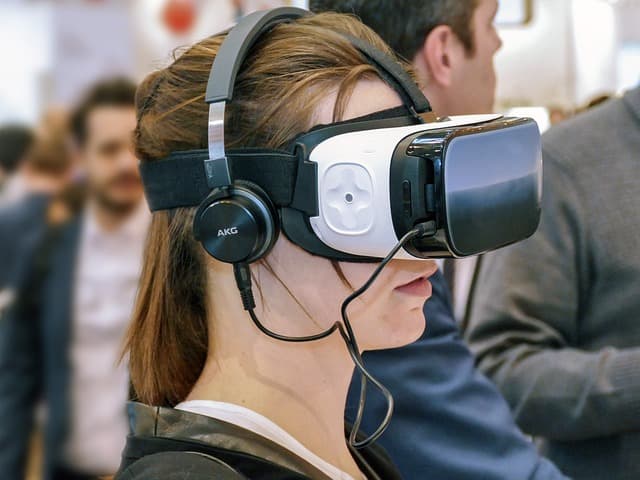
- Samsung Gear VR: Developed in collaboration with Oculus, Gear VR is a smartphone-based virtual reality headset that uses a Samsung Galaxy smartphone as its display.
- HTC Vive XR Elite: A high-end PC-based virtual reality headset offering a premium VR experience.
- Oculus Quest 2 and Quest Pro: Standalone virtual reality headsets that do not require a PC to operate and provide freedom without wires.
- Sony PlayStation VR: Designed for PlayStation 4, offering an immersive gaming experience.
- Microsoft HoloLens 2: A mixed reality headset designed for enterprise use.
- Pico 4 VR: A standalone virtual reality headset for enterprise and educational use, offering a variety of VR experiences.
Apple Vision Pro: A new technological revolution in AR
The launch of Apple Vision Pro augmented reality headset in 2024 is expected to have a significant impact on the IT industry. As one of the most anticipated augmented reality devices, it is set to establish a new standard for AR technology and bring it to the forefront of the consumer market. As a result, the entire IT industry will likely have to adapt to these new technological advances in order to remain competitive.
Based on patents and reports, some of the Apple Vision Pro headset’s rumored features may include:
- High-quality displays: 2 x 4K = 8K
- Advanced eye tracking technology
- Hand gesture recognition and control
- Spatial audio
- Integration with other Apple devices such as iPhone and iPad
- ARKit and RealityKit frameworks for visualization
- Advanced haptic feedback
- 12 pass-through and tracking cameras/laser scanners.
Companies that effectively integrate augmented reality into their products and services will gain a significant advantage, while those that are slow to adapt may face difficulties. The release of the Apple Vision Pro headset is likely to be a turning point for the IT industry, bringing AR technologies and applications into focus.
AR QR codes bring augmented reality everywhere
As augmented reality technology advances, AR is expected to become increasingly widespread and accessible. This will be made possible by AR QR codes—specialized QR codes that can be scanned with an AR device to access 3D content. Learn how SaaS AR Code solutions can transform business operations.
Industrial AR QR Code
These codes can be placed on various physical objects and surfaces, giving users access to augmented reality experiences simply by scanning them with a smartphone or augmented reality headset. As AR devices become more accessible, AR QR codes are expected to become commonplace in public spaces, providing easy access to a wide range of AR content and experiences. As a result, AR is likely to become an integral part of our daily lives, with access to AR experiences just a scan away. Learn more about how businesses can use AR QR codes to increase customer engagement.