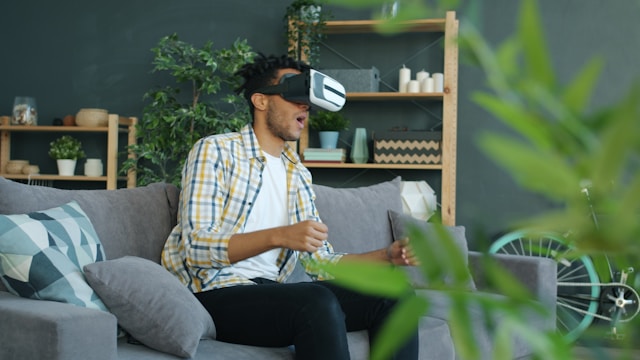

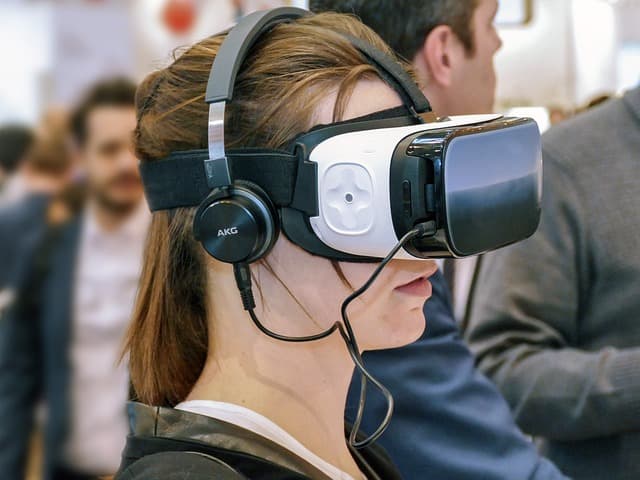
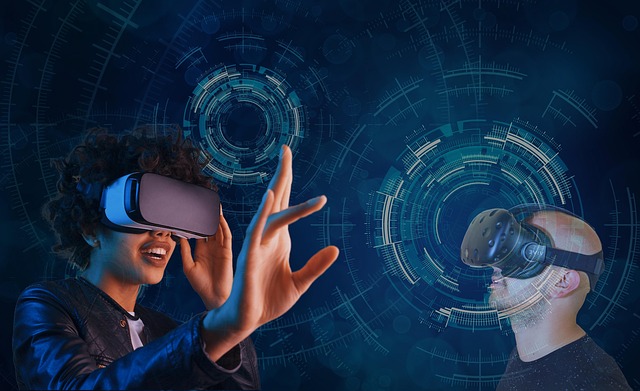
Not so long ago, a regular calculator was an amazing thing that not every student or teacher could afford. Today, technological progress has come a long way and shows no signs of stopping. Chemistry experiments are conducted in digital laboratories, physics is supplemented with robotics and 3D modeling, and even virtual reality hardly surprises anyone anymore.
VR in education covers increasingly broad areas, from the study of natural sciences to traveling to other eras in history lessons.
What is VR?
Virtual reality is an environment created through the use of special equipment and software. It allows participants not only to immerse themselves as deeply as possible in the subject being studied, but also to interact with it. This distinguishes it from AR, or augmented reality. Schoolchildren and students can choose utilities for studying space and gravity, human anatomy, geography, biology, natural sciences, and other subjects.
VR requires special equipment. This is how teachers and students immerse themselves in a three-dimensional world and interact with it. If desired, some applications can be run directly on a computer screen. In this case, the educational process resembles an exciting game.
VR technologies in education
The main advantages of using VR technologies in education are that they can improve the educational process by offering unique opportunities for interaction with learning materials. Here’s how VR can help in education:
- Visualization of complex concepts: VR allows you to visualize abstract concepts in 3D.
- Virtual tours: Students can visit historical sites and museums virtually.
- Interactive laboratories: the ability to conduct virtual experiments and classes.
- Personalized learning: adaptation to the needs of each student.
- Increased engagement: VR makes learning fun and interactive.
- Critical thinking development: Interacting with virtual objects develops critical thinking.
Thus, VR technologies make education more effective and accessible. The simplest example of the application of virtual reality is moving participants into a space where they can find themselves in the country they are currently studying in history class, or in the laboratory where a particular discovery was first made.
A VR lesson is an educational activity conducted using virtual reality technologies. Such lessons allow schoolchildren and students to immerse themselves in virtual environments where they can interact with educational material in three-dimensional space. This can include virtual tours, laboratory work, simulations, and other interactive activities.